Ninety Seconds of Chaos: How the Jobs Report Rewrites the Market's Rulebook at 8:30 A.M.
The Moment the Market Holds Its Breath
At 8:30 A.M. Eastern on the first Friday of the month, roughly 130,000 government employees' worth of data collection gets compressed into a single release. The Employment Situation report — nonfarm payrolls, the unemployment rate, average hourly earnings — is the most consequential ninety seconds in the monthly calendar for US equity and rates traders.
What matters is not whether the headline number beats or misses consensus. It is what happens to the market's plumbing in the seconds after the print. Bid-ask spreads in S&P 500 futures can widen tenfold. Options implied volatility, which had been priced around the event, collapses or expands violently. Liquidity providers, who are not obligated to stand in front of a freight train, pull their quotes. The order book thins precisely when you most want it deep.
Traders who understand this dynamic treat the release differently from those who simply try to guess the number. The former trades the aftermath. The latter becomes the aftermath.
Why the Number Matters Less Than the Reaction
There is a persistent retail belief that trading the payrolls print is a directional bet: strong jobs means buy stocks, weak jobs means sell. The reality is more textured. A hot payroll figure can send yields higher, pressure equities through the rates channel, and simultaneously strengthen the dollar — a three-asset response that no single-direction trade captures cleanly.
More importantly, the market's interpretation of the number shifts from month to month. In one regime, strong hiring signals economic resilience and supports risk assets. In another, the same figure signals Fed hawkishness and triggers a selloff. The same 50,000-beat can produce opposite moves in consecutive months, because the marginal question the market is asking changes with the policy cycle.
This is why professional desks rarely take outright directional positions into the print. Instead, they structure trades around the expected move — the range implied by options pricing — and position for dispersion, expansion, or the failure of either.
The Expected-Move Math Every Trader Should Run
Before the first Friday, the implied move for the release is embedded in the options chain. A quick approximation: compare the straddle price on the front-week SPX or SPY expiry that captures the event against the straddle on a comparable non-event date. The difference isolates what the market is paying for payroll risk.
Say the event straddle implies a 1.2% move on the S&P 500 by the close of release day. That number is not a prediction — it is a price. If you believe realized volatility will exceed it, structures like long straddles or call spreads with defined risk make sense. If you believe the market is overpaying for the event, iron condors or ratio spreads monetize the premium decay that follows the print.
The critical discipline: calculate this before the release, not after. Post-print, the options market reprices in seconds, and the edge evaporates with it.
Where Retail Traders Get Run Over
The post-print environment is unforgiving to the unprepared, and the failure modes are consistent enough to catalog.
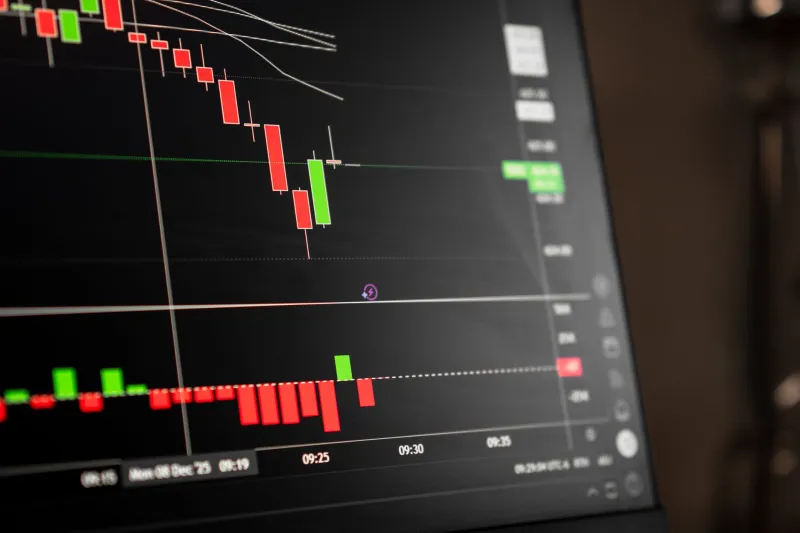
Stop-hunt fills. Stops clustered just beyond obvious technical levels are swept in the initial spike — often within the first thirty seconds — before the market reverses. The trader who placed a stop 0.5% below support on the E-mini watches it fill at the worst tick of the session.
Slippage on market orders. During the liquidity vacuum immediately following the release, a market order in a single-name stock can fill several cents to several dollars through the pre-print quote. The bid-ask spread is not a suggestion; during the whipsaw, it is a toll booth.
The second move. Perhaps the most reliable pattern in event trading: the initial directional spike frequently reverses within fifteen to forty-five minutes as the market digests the report's internals — participation rate, wage growth, the household survey — and as algorithms recalibrate. Traders who chase the first move often donate their capital to those who trade the second.
A Structural Approach to the Print
A disciplined framework looks something like this:
-
Size down or stand aside. There is no obligation to trade every event. Reducing position size into the print is a legitimate edge-preserving decision.
-
Define the scenario map. Write down, before 8:30, how you will respond to a beat, a miss, and an in-line print — including the second-move reversal scenario. Decisions made in advance are decisions made without adrenaline.
-
Let the dust settle. The 9:45 to 10:30 window frequently offers cleaner signal than the opening thirty minutes, with restored liquidity and a clearer read on how institutional flow is positioned.
-
Trade the structure, not the headline. Wage growth and labor force participation often drive the rates and dollar response more than the payrolls figure itself. Read the internals before committing capital.
The Edge Is in the Preparation
The payrolls release rewards traders who respect it and punishes those who treat it as a lottery ticket. The number itself is public information, instantly priced. The durable edge lies in understanding the mechanics of the event — the liquidity withdrawal, the implied-move math, the anatomy of the whipsaw — and structuring positions accordingly.
Markets do not pay for knowing what happened. They pay for being positioned before it happens, with risk defined and exit plans written in cold blood. First Friday is not a gamble for those who prepare. It is a scheduled exam — and most of the room never studied.