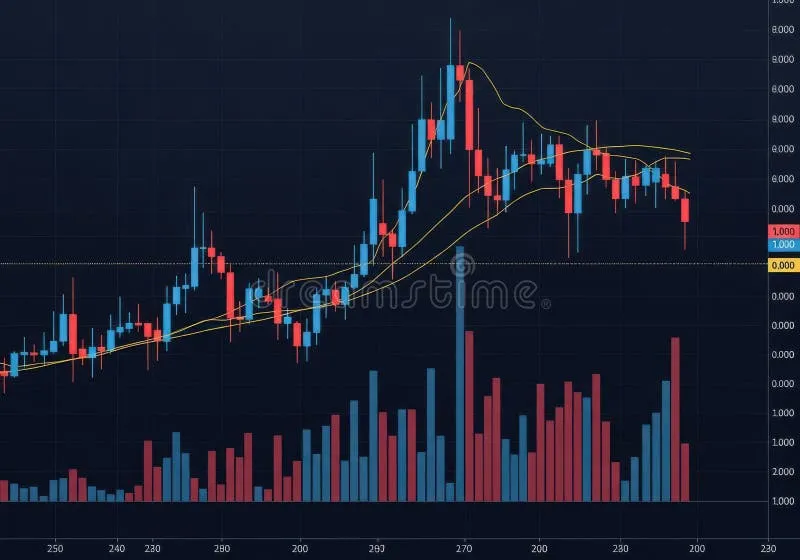
The Failed Breakout Playbook: Trading the Trap Instead of Falling Into It

Every trader has lived it. A stock coils for weeks beneath a well-defined ceiling, and when it finally punches through, the move feels inevitable. Two sessions later, price is back inside the range, the breakout buyer is underwater, and the only clear winner is whoever sold into the spike. The uncomfortable truth is that failed breakouts are not anomalies — they are the statistical majority. Learning to read them, and eventually to trade them, is one of the more durable edges available to the active US trader.
Why the Crowd Is Structurally Wrong at Breakouts
The reflexive logic of a breakout is seductive: price confirms conviction, conviction attracts more buyers, and the trend feeds itself. George Soros built a career on the observation that such feedback loops can be real — but they require fuel. When the fuel is absent, the same mechanism runs in reverse, and the failure becomes its own trend.
Consider what a textbook breakout actually demands. Late buyers are paying prices well above where early participants accumulated. Their stops cluster just below the breakout level. Everyone who hesitated is now chasing, which means the easy money has already been spent. What remains is a fragile structure of leveraged, stop-heavy positions with no fresh demand beneath them. That is not strength. That is a ledge with a crowd standing on it.
The Anatomy of a Genuine Move Versus an Engineered One
A real breakout leaves a different signature than a trap, and the differences are visible if you know where to look.
Consolidation quality. Genuine bases tend to tighten over time — volatility contracts, the range narrows, and volume dries up as supply is absorbed. A wide, choppy consolidation with heavy churn suggests distribution, not accumulation. Ask yourself whether the base is getting quieter or louder as it matures. Quiet bases launch; loud bases leak.
Volume confirmation. A legitimate breakout typically shows expanding volume on the thrust and, critically, volume that does not evaporate on the retest. Traps often display the opposite: a single volume spike on the break, followed by immediate decay. That one-day burst is frequently the market selling you the top, not institutions building a position.
The close, not the poke. Intraday penetrations that fail to hold into the close are among the oldest stop-run mechanics in the book. Price probes above resistance, triggers resting buy stops and breakout orders, and the resulting liquidity allows larger participants to unload. If the daily close retreats back inside the range, treat the move as suspect until proven otherwise.
Time above the level. Genuine breakouts tend to hold above the prior range for multiple sessions. A move that survives two or three closes above resistance has, in most cases, converted sellers into supporters. A move that cannot manage a single close has told you everything you need to know.
The Post-Mortem Checklist
When a breakout fails — whether you were in it or watching — the discipline of a structured review separates professionals from repeaters. Work through five questions:
- What was the base quality? Was the consolidation tightening or distributing before the break?
- Did volume behave? Was there follow-through participation, or a single spike followed by silence?
- Where were the stops? Map the obvious stop clusters below the breakout level. If the failure swept them, you likely witnessed engineered liquidity capture.
- Who was the marginal buyer? Was the move driven by retail momentum chasing, or by measurable institutional accumulation?
- What did the failure produce? Failed breakouts often generate the sharpest moves in the opposite direction, because trapped positions must unwind.
Keep a journal of failed breakouts in your core names. Patterns emerge quickly — certain tickers, sectors, and market regimes produce traps far more reliably than others.
Trading the Failure Itself
Here is the paradox worth internalizing: the failed breakout is frequently a higher-probability setup than the breakout. The trap has already done the work of identifying where the crowd is positioned. Once stops are swept and late longs are trapped, the market often reverses with unusual force because the selling is mandatory, not optional.
A practical approach: when a breakout closes back inside its range on elevated volume, watch for the retest of the breakout level from below. If price stalls there — the old support turned resistance — the short entry offers a defined-risk trade with the trapped longs as your unwitting partners. The stop sits just above the failed breakout high; the target is the opposite side of the range or, in strong reversals, well beyond it.
The Psychological Discipline of Waiting for Failure
None of this works without emotional control. The hardest part of this framework is refusing to participate in the initial break. Watching a stock rip through resistance while you sit on your hands requires the same conviction discipline that separates patient traders from the crowd. Remind yourself that your edge is not in catching the move — it is in recognizing when the move has consumed its own fuel.
Markets reward those who understand where the crowd is trapped. The failed breakout hands you that map for free. Read it carefully, trade it with structure, and the trap that once cost you money becomes the setup that pays you.