Ninety Minutes Before the Bell: The Morning Discipline Most Retail Traders Skip
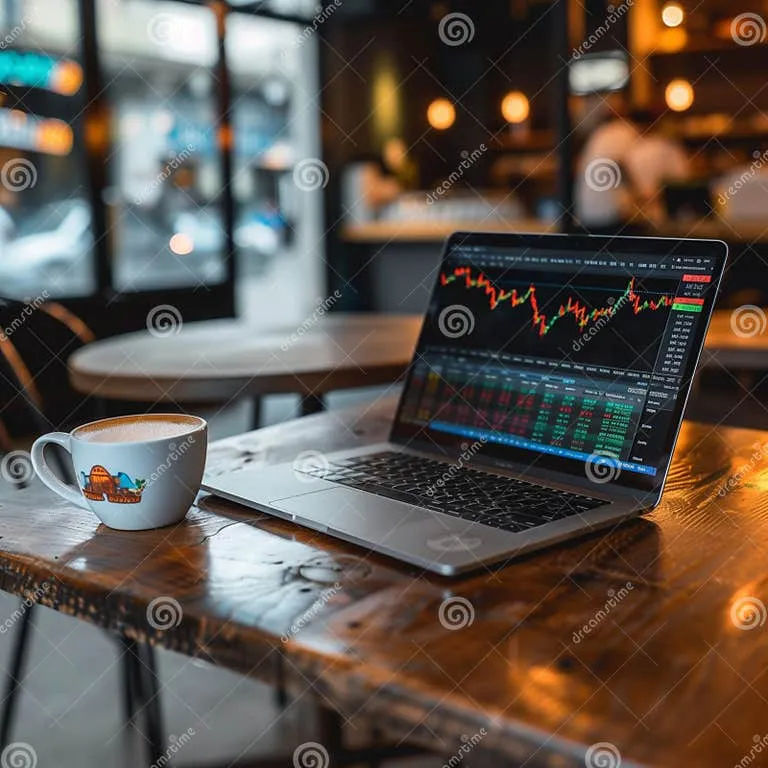
Photo: trader morning coffee laptop pre-market stock charts before opening bell, via thumbs.dreamstime.com
There is a quiet assumption embedded in most retail trading habits: that the trading day begins at 9:30 AM ET. For professionals, it began hours earlier. The half-day before the open — roughly 8:00 to 9:30 in New York — is where positions are planned, scenarios are priced, and emotional leverage over the session is established. Traders who arrive at the bell unprepared do not merely miss information; they surrender the psychological high ground before a single share changes hands.
For the American retail trader juggling a day job, a commute, and a household, the good news is this: the professional edge is not a matter of resources. It is a matter of routine. And routines can be copied.
Why the Open Punishes the Unprepared
The first thirty minutes of the US session concentrate a disproportionate share of daily volatility. Opening range breakouts, gap fills, and algorithmic stop runs all collide in a window where bid-ask spreads are widest and price discovery is least settled. A trader who has not decided in advance how to interpret this noise will interpret it emotionally — which is to say, badly.
Preparation does not eliminate volatility. It converts it from a threat into a set of pre-authorized decisions. The difference between a planned trade and an improvised one is the difference between executing a thesis and reacting to a feeling.
The Framework: Sixty to Ninety Minutes, Six Steps
The routine below assumes a 9:30 ET open and requires roughly 60–90 minutes, much of it passive. It can be compressed to twenty minutes on mornings when life intervenes.
1. Read the overnight session (15 minutes, often over coffee). Before 8:00 AM, review how Asian and European markets closed and how US index futures are trading. The goal is not prediction but narrative: is risk appetite consistent with yesterday's close, or has something shifted? A trader who knows why the S&P futures are down 40 points before the open is no longer surprised by it at 9:31.
2. Check the calendar, not just the chart (5 minutes). Economic releases — the 8:30 AM jobs or inflation prints, the 10:00 AM sentiment surveys, Fed speakers — define the day's risk map. Mark the times. A beautiful setup that resolves two minutes before a CPI release is not a setup; it is a coin flip with a commission attached.
3. Build a two-scenario plan per instrument (15 minutes). For each name or contract on your watchlist, write down the bullish trigger, the bearish trigger, and the invalidation level for each. Two scenarios, not ten. The discipline of choosing forces you to admit what would actually change your mind.
4. Pre-stage conditional orders (10 minutes). Where your platform allows it, set alerts or bracket orders at your trigger levels. This is the single highest-leverage step for part-time traders: it removes the need to watch the tape during a 10:00 AM meeting. The market will come to your levels, or it won't. Either answer is acceptable when the order is already placed.
5. Define the day's risk budget (5 minutes). Decide the maximum loss you will accept for the entire session — in dollars, not percent of some abstract account. Write it down. A trader who has not decided in advance what a bad day costs will negotiate with that number in real time, and the market always wins those negotiations.
6. Close the loop after the open (10 minutes, midday or evening). Score your plan against what happened. Not profit and loss — plan adherence. The compounding effect of this review is where the 90% gap actually closes.
The Part-Time Trader's Structural Advantage
It is worth stating plainly: the trader who cannot watch the open live holds a hidden advantage. Screen-watching invites overtrading, and overtrading is the retail trader's most reliable tax. A pre-staged, conditional framework converts absence into discipline. You cannot chase a move you never saw.
The routine also reframes the psychological relationship with the session. Traders who prepare report the same shift described by professionals in every competitive field: the work happens before the event, so that during the event there is nothing left to do but execute. Anxiety is largely the symptom of undecided questions. The checklist answers them in advance, in a calm state, rather than at 9:31 in a state of adrenaline.
Making It Stick
Habits fail when they are aspirational rather than mechanical. Three practical anchors:
- Same time, same place. Attach the routine to an existing habit — the commute, the first coffee, the school drop-off.
- Written, not mental. A plan that lives in your head is a preference, not a plan. A one-page template, filled in by hand, survives stressful mornings far better than intention.
- Score the process weekly. Judge yourself on adherence, not outcomes. A profitable day executed outside the plan is a warning sign; a losing day executed within it is tuition.
The Edge Nobody Sells You
No indicator, subscription, or platform feature substitutes for preparation, which is precisely why it remains one of the few durable edges available to the individual trader. Institutions spend fortunes on pre-market analytics; the retail trader's version costs ninety minutes and a notebook. The market opens at 9:30. The trading day, for those who intend to win it, starts considerably earlier.