When the Story Becomes the Trade: Navigating Reflexive Market Cycles Before the Narrative Breaks
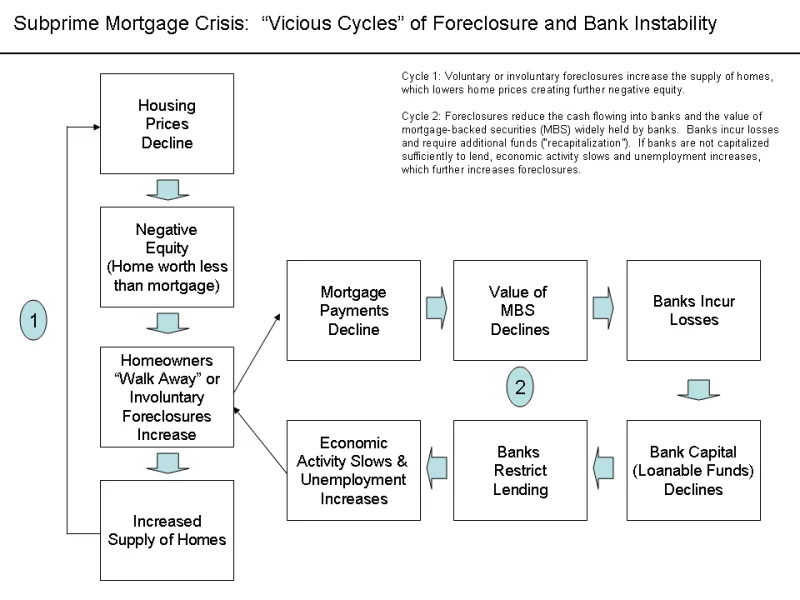
Photo: Farcaster (talk) 17:06, 26 December 2008 (UTC), CC BY-SA 3.0, via Wikimedia Commons
There is a persistent assumption embedded in most technical analysis curricula: that price charts reflect an objective, external reality. Support levels hold because they hold. Momentum persists because it persists. Yet experienced traders repeatedly encounter situations where textbook setups fail without warning—not because the technicals were wrong, but because the underlying narrative that gave those technicals their power had quietly collapsed.
This is the reflexivity trap. And for active traders operating in today's fast-moving markets, understanding it may be more valuable than mastering any single chart pattern.
What Reflexivity Actually Means in Practice
The concept of reflexive feedback in financial markets—most prominently associated with investor George Soros—holds that market participants do not merely observe and react to objective conditions. Their perceptions, expectations, and collective positioning alter the very fundamentals they believe they are analyzing. Price action shapes narratives; narratives shape capital flows; capital flows shape price action. The loop is self-reinforcing until it is not.
This is categorically different from standard behavioral finance discussions about bias or irrationality. Reflexivity is not about traders making cognitive errors—it is about traders whose rational responses to current conditions collectively create new conditions that eventually invalidate the original thesis.
For a technical analyst, this creates a specific and underappreciated risk: the indicators you are reading were calibrated against historical data generated during a different narrative regime. When the dominant story changes—when the market transitions from pricing in a soft landing to pricing in recession, or from risk appetite to liquidity crisis—the correlations and patterns that underpinned your signals can dissolve almost overnight.
The 2020 Volatility Crush: A Case Study in Reflexive Compression
Consider the extraordinary compression of the CBOE Volatility Index throughout 2020's post-March recovery. As the Federal Reserve backstopped credit markets and fiscal stimulus flooded household balance sheets, a powerful narrative took hold: central bank intervention had effectively placed a floor under risk assets. This belief was not irrational in isolation. But it generated its own momentum.
Options sellers, emboldened by the narrative, flooded the market with short-volatility exposure. That selling pressure mechanically suppressed implied volatility readings, which in turn made risk models appear favorable, which encouraged further leverage and further options selling. The reflexive loop compressed volatility to levels that bore little relationship to the genuine uncertainty still present in the global economy.
Traders relying on standard mean-reversion signals—which historically performed well when VIX moved to certain levels—found those signals failing repeatedly. The narrative had overridden the historical calibration. Those who understood the reflexive dynamic recognized that the story of central bank omnipotence was sustaining the compression, and that any credible threat to that story—whether a policy misstep, an inflation surprise, or a geopolitical shock—could unwind the loop violently.
Crypto Cycles and the Reflexivity Amplifier
Cryptocurrency markets offer perhaps the purest modern laboratory for observing reflexive dynamics. The 2020–2021 bull cycle demonstrated how narrative and price can become almost entirely co-constitutive. Institutional adoption headlines drove price higher; higher prices attracted media coverage that amplified the institutional adoption narrative; amplified coverage attracted retail participation that drove prices higher still.
Critically, the fundamentals of blockchain utility were not driving the cycle in any direct sense. The perception of accelerating adoption was driving flows, and those flows were generating on-chain metrics—wallet growth, transaction volumes, developer activity—that appeared to confirm the adoption thesis. Reflexivity rendered the distinction between cause and effect nearly meaningless.
For active traders, the danger was not entering the cycle—that was often well-signaled by momentum indicators. The danger was remaining positioned after the reflexive loop began losing coherence. By early 2022, several warning signs were visible: narrative breadth was narrowing (fewer new adoption stories capable of moving markets), leverage ratios in futures markets had reached historical extremes, and the marginal buyer required to sustain the loop was increasingly speculative rather than strategic.
Technical signals, however, continued to flash mixed readings well into the deterioration phase. Moving average crossovers, RSI levels, and volume profiles were all responding to the residual momentum of the prior regime rather than the emerging reality.
A Framework for Identifying Reflexive Exhaustion
Active traders need a systematic approach to detecting when a reflexive cycle is approaching its inflection point. The following framework offers a starting structure.
1. Narrative Breadth Assessment Monitor the diversity of catalysts sustaining the dominant story. A healthy reflexive cycle draws on multiple reinforcing narratives. Exhaustion typically manifests as narrowing—fewer distinct catalysts, greater dependence on a single theme, and increasing sensitivity to any news that contradicts the consensus.
2. Positioning Concentration Metrics COT (Commitments of Traders) reports, options open interest skew, and prime brokerage leverage data can reveal when the trade has become too crowded. Reflexive moves tend to peak precisely when consensus positioning is most extreme, because there are fewer incremental buyers available to sustain the feedback loop.
3. Narrative-Price Divergence Perhaps the most actionable signal: when the dominant narrative is still intact but price action is no longer responding with the same magnitude or consistency, the reflexive loop is losing energy. If positive macro headlines generate diminishing price responses, the marginal buyer is already exhausted.
4. Cross-Asset Confirmation Breakdown Reflexive cycles typically produce correlated moves across related assets. When those correlations begin fracturing—when equity sectors that should move together start diverging, or when credit spreads and equity volatility decouple from their recent relationship—it often signals that the underlying narrative is losing its organizing power.
Practical Implications for the Active Trader
The most actionable takeaway from reflexivity theory is not predictive—it is defensive. Attempting to time the precise moment a reflexive cycle breaks is extremely difficult, and the asymmetric risk of being early on the short side of a momentum-driven narrative is well-documented. Rather, the value lies in raising the bar for position maintenance as reflexive exhaustion signals accumulate.
When two or more of the framework indicators above are flashing caution, the appropriate response is not necessarily an immediate reversal but a disciplined reduction of exposure and a tightening of risk parameters. The goal is to exit the crowded trade while liquidity remains available—before the consensus reversal triggers the disorderly unwind that characterizes reflexive collapses.
Technical analysis remains a valuable tool. But its signals must always be contextualized within the prevailing narrative regime. When that regime is shifting, the most important trade you can make is the one that gets you out of the old story before the market has finished writing the new one.