Central Bank Divergence and the Art of Capitalizing on Global Policy Fractures
Photo: Solargis, CC BY 4.0, via Wikimedia Commons
For the active trader, few environments are more fertile than one in which the world's major economies are marching to entirely different drummers. In 2024, that is precisely the landscape taking shape. The Federal Reserve, the European Central Bank, the Bank of Japan, and the People's Bank of China are each navigating distinct inflation profiles, labor market realities, and political mandates—and the divergences between them are widening in ways that have historically preceded significant market dislocations.
At Soros Trading, precision analysis means more than reading a headline. It means building a framework for identifying where these fractures are forming, estimating when they will reach a breaking point, and positioning accordingly—before the broader market catches up.
What Policy Divergence Actually Means for Markets
At its most fundamental level, monetary policy divergence refers to a period in which different central banks are simultaneously pursuing materially different interest rate trajectories. When the Fed holds rates at a restrictive level while the Bank of Japan maintains ultra-accommodative policy, the interest rate differential between the two economies creates persistent pressure on the yen relative to the dollar. Traders who understand this dynamic can construct positions in currency pairs, rate-sensitive equities, or sovereign debt instruments that benefit from the resulting flow of capital.
This is not a new phenomenon. Macro-focused investors have long recognized that the most durable trends in financial markets are often born from structural policy misalignments rather than short-term sentiment shifts. The difference in 2024 is the unusual breadth of divergence. Multiple major economies are simultaneously at inflection points, which amplifies the potential for dislocations across asset classes—not just currencies, but commodities, fixed income, and equity sectors with significant international revenue exposure.
The Fed's Holding Pattern and Its Global Ripple Effects
The Federal Reserve entered 2024 having completed one of the most aggressive rate-hiking cycles in modern history. With the federal funds rate holding near multi-decade highs, U.S. dollar-denominated assets have continued to attract capital from yield-starved investors abroad. This dynamic has placed sustained upward pressure on the dollar index (DXY), which in turn has created headwinds for emerging market economies that carry dollar-denominated debt.
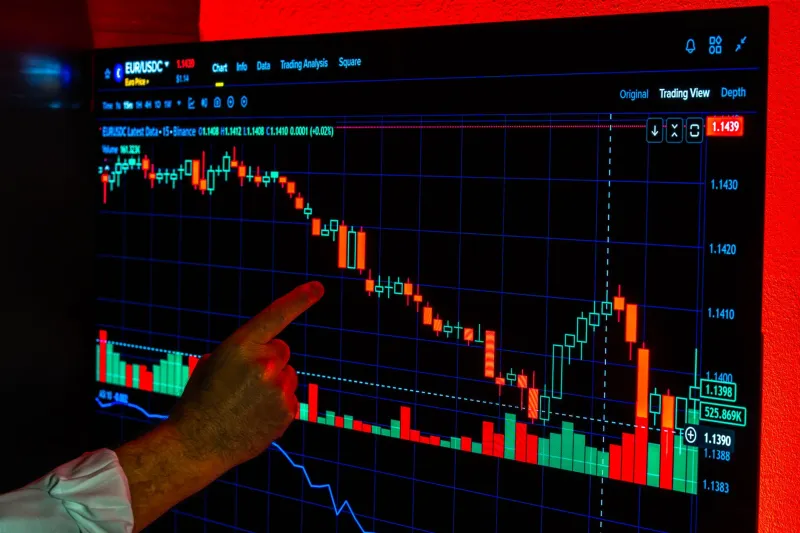
For active traders, the critical question is not whether the Fed will eventually cut rates—it almost certainly will—but rather the timing and pace of that pivot relative to other central banks. If the European Central Bank moves first, as some analysts anticipate given softer eurozone growth data, the resulting EUR/USD movement could be substantial. Traders monitoring these signals closely, particularly divergences in core inflation data and forward guidance language from central bank officials, are best positioned to act before the consensus view is priced in.
Japan's Yield Curve Control Unwind: A Case Study in Structural Dislocation
Perhaps no single policy shift in 2024 carries more potential consequence for global markets than the Bank of Japan's gradual retreat from yield curve control (YCC). For years, the BOJ's commitment to capping Japanese Government Bond yields near zero created a massive incentive for Japanese institutional investors—pension funds, insurance companies, life insurers—to seek yield abroad, particularly in U.S. Treasuries and European fixed income.
As the BOJ allows yields to rise domestically, the calculus changes. Repatriation of capital back into yen-denominated assets becomes more attractive, placing downward pressure on foreign bond markets and upward pressure on the yen. Active traders who track Japanese institutional flow data, BOJ policy statements, and Tokyo Consumer Price Index readings can gain meaningful advance notice of these shifts.
This is precisely the type of structural, multi-month dislocation that rewards patient, research-driven traders over reactive ones.
Currency Carry Trades: Opportunity and Risk in the Same Instrument
One of the most direct expressions of central bank divergence is the currency carry trade—borrowing in a low-interest-rate currency and investing in a higher-yielding one. When policy divergence is wide and stable, carry trades can generate consistent returns. When divergence narrows unexpectedly, or when risk sentiment deteriorates sharply, the unwinding of carry positions can be violent and swift.
In 2024, the most-watched carry structures involve the Japanese yen and, to a lesser extent, the Chinese yuan. Traders engaging with these instruments must balance the structural opportunity against the asymmetric risk of a sudden reversal. Disciplined position sizing, clearly defined stop levels, and ongoing monitoring of the macro catalysts driving the trade are non-negotiable components of a responsible carry strategy.
Geopolitical Risk as a Compounding Variable
Macroeconomic divergence does not occur in a vacuum. Geopolitical developments—ongoing conflicts, trade policy shifts, election outcomes in major economies—serve as amplifiers of underlying structural imbalances. The 2024 electoral calendar alone is remarkable in scope, with significant votes scheduled across the United States, the European Union, the United Kingdom, and several major emerging markets.
For the active trader, geopolitical risk is best treated not as a binary event but as a probability-weighted variable that adjusts the distribution of outcomes for existing positions. A framework that incorporates scenario analysis—what happens to a given currency pair or sector ETF under different electoral outcomes—provides a more durable edge than one that simply reacts to headlines.
Building a Macro Divergence Monitoring Framework
Precision trading in a divergence environment requires a systematic approach to information gathering and signal identification. At a minimum, active traders should be tracking the following on a regular basis:
- Central bank meeting calendars and forward guidance language: Changes in tone, even subtle ones, often precede formal policy shifts by weeks or months.
- Inflation differentials across G10 economies: Persistent gaps in core inflation rates are among the most reliable leading indicators of future rate divergence.
- Real yield spreads: Nominal rate comparisons can be misleading; real yields (adjusted for inflation expectations) provide a cleaner picture of relative monetary conditions.
- Capital flow data: TIC data from the U.S. Treasury, balance of payments reports, and institutional positioning surveys offer insight into where smart money is moving.
- Currency volatility surfaces: Elevated implied volatility in key pairs often signals that the market is pricing in a near-term resolution to an existing imbalance.
The Precision Trader's Advantage
The traders who consistently profit from macro divergence themes are not necessarily those with the most sophisticated models. They are the ones who combine rigorous research with the patience to wait for a thesis to develop and the discipline to exit when the underlying logic no longer holds.
In 2024, the policy landscape is offering an unusually clear set of divergence signals for those willing to do the analytical work. The fractures between the Fed, the BOJ, the ECB, and the PBOC are not background noise—they are the primary drivers of cross-asset price action, and they will be for the foreseeable future.
At Soros Trading, our commitment is to provide the analytical depth and precision tools that help active traders see these patterns before they become consensus. The edge belongs to those who prepare.